Tuesday, February 26, 2013

Update from Noelle in Utila


My first two weeks on the Bay Island of Utila have far exceeded my expectations. Since starting work at the Iguana Research and Breeding Centre, I have been involved in a variety of projects and activities, some of which I have already seen the fruits of my labour, albeit relatively small.


On my first day, I participated in a recycled glass bottle workshop at the local NGO Bay Islands Conservation Association (BICA) with the other volunteers from the Centre, including a large group of biology students visiting from the capital, Tegucigalpa. During this workshop, we used a metal wire similar to what you would find in your typical oven to heat and cut the base of the bottles, and made drinking glasses out of them. These glasses were sold to a popular bar in town called Tranquila and we’ve already been served with them!

Last week we spent a total of 4 hours walking through a mangrove monitoring site to label trees we would use to set the limits for the iguana research area. Some of my responsibilities at the Centre include helping to take care of the Swamper iguana, a species endemic to the island of Utila, and whose habitat is in the mangroves. During my time here, I will provide support to the new mangrove restoration project by visiting various monitoring sites to assess the state of the mangroves in the hopes of protecting this valuable ecosystem.

I am also involved in the environmental education project, leading an “arts and crafts” workshop using recycled materials to raise children’s awareness about our current environmental issues and the need to reduce our waste while using our creativity to turn “garbage” into something useful or decorative. For instance, we made brooms out of a plastic pop bottle cut into strips, pen holders using toilet paper rolls and animals out of plastic cups.


We’ve held two of these workshops and this Friday afternoon, in honour of Wetland Day last weekend, we made a mangrove mural with bottle caps, cloth from a T-shirt and aluminum paper. We intend to continue this tradition with the support of local organizations including the Whale Shark Ocean Research Centre and BICA. With the beginning of the school year already started, I will help give presentations within the next few weeks on environmental themes including ecology, anthropological impact on the environment and climate change.

I’ve already had the opportunity to see the less-explored parts of the island, including the freshwater caves. We walked an hour to and from the caves, and lit up our way inside with candles, where swimming in the refreshing clear water paid off our hard work.


Within the next few weeks we hope to organize community events such as beach cleanups to raise awareness about the current waste management challenge and to get people feeling involved and contributing to making a difference.

I’ve been enjoying gaining hands-on experience in the environmental field and I look forward to seeing the rest of our projects through, learning from and contributing to them as much as I can.


Friday, February 15, 2013

Update from Anna in Honduras


Buenos Dias from Honduras!

It has been a busy few months since we last spoke and we are just finishing up, continuing to manage and beginning new projects! Rainy season is coming to an end and the sun has been out full force, unfortunately a source of envy for our fellow Canadians still in hibernation back home. That being said, we have a full month ahead of us with visitors coming from all over the Americas to lend a hand and experience the beauty that is Salado Barra.

So far the garden has come in wonderfully  - well except for the iguanas who have a particular fondness for carrots - there are trees, herbs, fruits and veggies a plenty! With the onset of the hot weather, I am hoping to test out our new solar dryer so as to make teas and seasoning for the community to sell at their new - drumroll and pause for emphasis - cafe! That is right ladies and gentlemen, a new cafe! Currently Mira and I have been drafting up a revised ecotourism management plan alongside Fallsbrook Center and our partner organization La Fundacion Cuero y Salado. While a management plan for the refuge already exists in theory, it's implementation in practice has faced considerable challenges.  A lack of resources, transparency, supervision, cooperation and communication has led to the deterioration of management at various levels. As a result, we are hoping to start off fresh from the bottom up, working with different price points and micro enterprises in the community, including the jewelry group, the solar panel group, the tour guides and hospitality centres and the up and coming cafe. 

Given our isolation, it has been quite a task getting everything ready for this month's grand opening. Sanding and varnishing tables and chairs, refitting the kitchen, securing windows, designing menu plans that are not dependent on electricity, hooking up new plumbing, sourcing food and material suppliers, organizing staffing... We certainty have had our work set out for us but it is exactly these hands on projects that provide the practical experience you can't get in school. After spending some time chatting with fellow intern Jessie Lyon who is visiting from Nicaragua, it has been really cool to see how much freedom we have had in designing our own projects. One of the many lessons learned during this start-up as well as during our whole time down South, has been how to take initiative and to self-direct. To recognize opportunities and to act on them rather than to wait for instruction. It has been an interesting experience training myself to think simultaneously at both the macro and micro scale, to push myself creatively and to plan both short and long term. 


Kites flying from boats on the water!
Skilled kite handing...


On a different note, last weekend we celebrated 'Wetland Day' which consisted of different environmental education activities, canoe races and two very full piñatas! While Mira and Jessie maintained composure amidst a shower of chiclets, bonbons, dulces and gorditas, the 12 year old in me was set loose. Confetti in our hair, dirt under our nails, sandals thrown aside, candies stuffed in every which pocket, we came together as adults and children, men and women, Canadian and Honduran in a throng of screaming laughs, celebrating the many people, places and passions of our beautiful world. 

Hasta la proxima vez,

Anna 


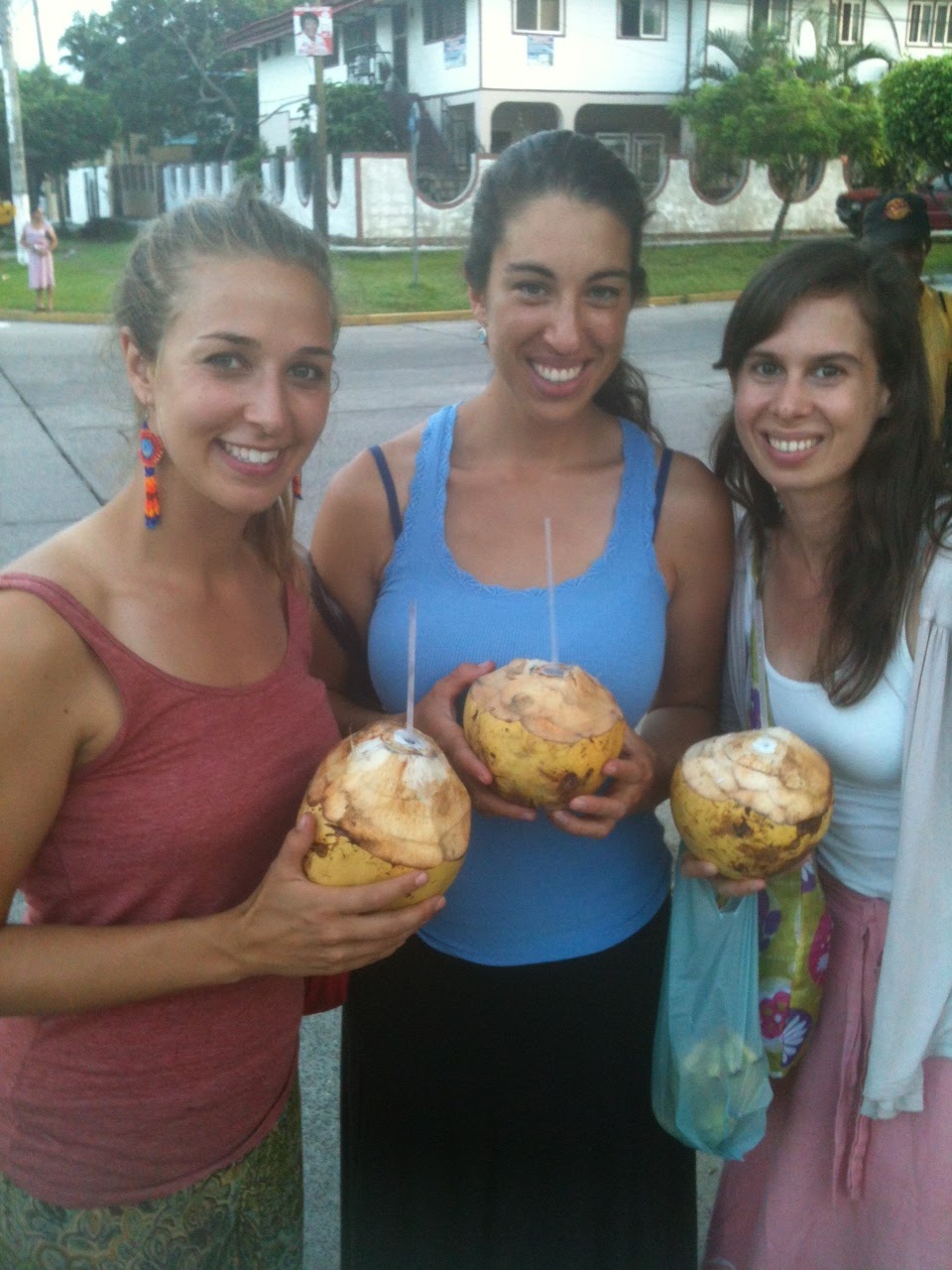
Anna, Mira and Noelle enjoy fresh coconut milk.


Monday, February 11, 2013

More from Cavan in Costa Rica


Six months have passed since I arrived in Londres de Aguirre, Costa Rica.  Currently I am working on a number of small projects including creating an internship program, researching questions about Analog Forestry, updating the website and various outdoor activities.  Of the projects, the research is the one I find the most interesting because of the subject matter.  Questions relate to larger land management ones like the following: How much land in a region should be reserved as representative intact ecosystems?  Can exotic plants fulfill the same ecological function as native plants?

This week we had a workshop on Participatory Guarantee Systems (PGS).  Basically, PGS is a way of verifying compliance with a set of standards, but instead of a third party certifier, it uses a peer review process.  The standards can be for anything and are often determined by the parties being certified, for example, organic certification in Peru or wild harvested products in India.  There were three experts at the workshop and a number of other people with experience implementing PGS in Mexico and Costa Rica.  Hopefully the IAFN will be able to work out some guidelines for implementing PGS with its Forest Garden Products (FGP) standard.
Cavan speaking with another participant from the Participatory Group Certification Workshop


The weather has finally switched into the dry season after a delayed start.  This means that the river is low enough to swim in and that the days are mostly sunny.  While the sun is nice, it makes the days warmer than during the rainy season.  After this many months of warm weather, it hardly seems possible that the temperature in Canada only rises above the minimum temperature here for two months of the year.  Tourism is also more active during the dry season, which means that everyone is busier because so many people work in the industry.  So with nice weather and interesting work, all in all things are pretty peachy.

A view from Cerronara, a town about 3 hours from where I am based.


Update from Greg Lynch in Nicaragua


With just one week in, it feels like I’ve gotten myself a bit of a rhythm here. Certainly a rhythm much different than at FBC but a rhythm nonetheless.
I flew into Managua on Saturday night and was happily greeted by a Carlos, a cab driver sent by our friends at Casa Candiense. He quickly whisked me out to the Casa to get a good night sleep and to meet Carrolle who is working as the education coordinator there. She made me feel very at home and after a short chat we crashed.
Since I was told Monday would be best to arrive I had a day to explore Managua. Carrole took the time out of her day to drive her giant truck through the swarming streets. I was pleased to see that Managua has decorated for Christmas in the classic neon purple and pink I so associate with childhood Christmases. I mustn’t forgot the three lane roundabouts with glowing Christmas Trees and a statue of Jesus atop the world. The market, a delicious meal in enormous chairs and my first day in Nicaragua was soon done.
Monday morning I was off to Sabana Grande. I spent most of the day on the bus, though by far one of the more comfortable bus rides I’ve taken in a while. By late in the afternoon I had arrived and found myself sitting at a table at the Solar Restaurant with the Mujeres chatting excitedly about all manner of things. It became very clear these women run the show and know how things should be done. Once again I was soon steered in a new direction. I was brought to the home of Adelina where I will be hosted for the next month and a half.
Within just a few minutes of arriving I was fed and welcomed into the family very warmly. Adelina whipped up a quick meal while her three daughters chatted with me and explained the home. With my own room, mosquito net, plenty of food, water and the pleasant soundscape of frogs, salamanders and dogs singing me to sleep it didn’t seem like long until I was awakened by chickens at my door.
Another great meal in the morning and I was down the path to the Centro Solar. Arriving, I soon met up with Ben and Jessie, interns from the first and second intakes respectively. With no time lost I soon got to know how things worked at the Centre and with the Mujeres. For my first day I joined the two of them on their projects and lent a hand in any way I could.
Day one at work here in Sabana Grande was a little confusing but certainly productive. Not one to hold back, I soon found myself standing on an adobe roof passing a stove pipe down into the kitchen to newly improved stove. Getting the stove up and running I was soon replacing the adobe shingles and back on the ground in no time.
Since day one I’ve been spending my mornings working with Maurito. Maurito maintains the gardens and does odd jobs for the solar restaurant. For those of you that know me I do enjoy a good chat; spending time with Maurito has given me plenty of practice at listening as well as chatting. It’s great to work with someone who is happy to teach about most anything from banana cultivation, the solar powered water system to Spanish grammar and the history of the enourmous 500 year old ceiba tree down the road from my house.
So here I am enjoying the community. Helping out with any project I can and learning a lot along the way. The women here are very interested in beekeeping so I’m going to see if I can get them set and ready before I go. The Nicaragua I am seeing now from Sabana Grande is one of warm people, strong women,  gorgeous views and an endless amount to learn.

Thursday, December 13, 2012

More from Adam and Elisa in Dominican- Biodiversity Restoration and Community Development Facilitators


Time flies! Work is rolling, friendships are blossoming and the beautiful vistas
are leaving us jaw dropped.  And to think, in a couple of weeks we will have
completed half of our internship abroad! Adam and I are realizing that the more we
weave ourselves into all kinds of projects, the harder it’s going to be to leave
come March.

Our approach so far has been to take advantage of any opportunity that comes our
way which means our weeks are flurries of activities running from meetings to
monitorings. These past months have been taken up by planning the big “Dia de
Campo” event which was a celebration of the reforestation project so far.  Adam
also tirelessly put together funding proposal to develop the forest industry in
Republic Dominican; while I spent a lot of time studying web design and planning
workshops.  A goal of ours is to ensure the continuity of the website updating
after we leave. So we have been offering computer training workshops to local
youth to teach them how to manage a website. In a couple of months we hope to have
trained a team of youth that will have a good foundation in web design and will be
able to promote their own region without relying on temporary interns.

On top of our outlined work plan, we also have been doing a lot of networking. One
of these partnerships is helping maintain communication between the Water Resource
PeaceCorps volunteers and ENDA.  Both organizations have worked together in the
past, so our role is to act as the intermediary to identify opportunities for
collaboration in the upcoming projects. We are also assisting the Incubedora de
Micro Empresas- The Incubator for Micro Enterprises  in Cotui  to develop a fruit
processing plant in a nearby community and working on various ecotourism ventures.

The concept of ecotourism is only starting to take off in Dominican. A number of
tour operating companies, including Colinas EcoTours, are actively working on
redefining  tourism in the country. For a country rich in biodiversity minus the
threat of any poisonous creatures; the time has come for the Dominican tourism
industry to turn its focus on the interior. A bonus from working in the ecotourism
sector is that we get to visit sites such as the Ruta del Cacao, and the wetlands
near Haitillo lake! Some of these tourist destinations are outcomes of  ENDA’s
forest management initiative so we are also promoting them via the website. In
parallel to our information gathering for the website, CATIE, the Centro
Agronómico Tropical de Investigación y Enseñanza – the Model Forest organization
based out of Costa Rica, is putting a 20 year legacy documentary together
highlighting all the Model Forest work that has been going on around the world.
We have had the fine privilege of accompanying the film maker to interview
involved members for the Dominican portion of the movie. 

Before the holidays start, we want to tie up loose ends and wrap up projects.  We
do look forward to some down time and getting to see more of the country.  There’s
also the highly anticipated the bachata legend, Frank Reyes, whose concert next
door at the De Melissa Car Wash has been marked in our calendar for weeks now!
It’s safe to say that yes in fact, we’ve caught the Dominican Latin Fever.

Saludos,
Elisa & Adam

Adam with his vegetation sampling partner.

Sr. Ferreira showing off healthy seedlings.


Tree nursery for reforestation project.

Monday, December 3, 2012

News from Salado Barra, Honduras – Mira Maude Chouinard, Biodiversity Restoration & Community Development Facilitator


Quite a few things happened in Salado Barra since Anna last wrote to you!  It is now the rainy season, and the workers of Falls Brook Centre’s local project – Proyecto Mangle – have been restoring and planting in the past few weeks.  All of the plants in our nurseries have to go into the ground before the dry season begins!

While Anna works hard in the kitchen and medicinal gardens with the hope of improving food security in the community, my individual work consists of monitoring and reporting the advancements and changes in the Biological Corridor (a project with the multinational Standard Fruit/Dole) and ensuring the success of the solar panel business that members of the community have started.  Together, Anna and I teach English and Environmental Education classes to kids in the community, and tackle the challenging task to revamp Salado’s ecotourism management plan.

A week ago, we were extremely lucky to have Dr. Ranil Senanayake, a systems ecologist and founder of the Analog Forestry restoration system, visiting us from Sri Lanka.  Dr. Senanayake has been involved in this project for a few years. His visit consisted of evaluating the progress of the Biological Corridor, the demonstration and restoration sites.  He also made sure to collect epiphytes from El Cacao (where Falls Brook Centre holds other projects), taught us how to put them back on trees to ensure their reproduction and proliferation.  Dr. Senanayake is an incredible source of information, and gave us the honor to evaluate one of our analog forestry designs.

Members of our project also held a reunion between workers of Salado Barra, Omoa and El Cacao, with the intent to share, learn and evaluate each project’s successes, challenges and lessons learned.  Anna and I were pleased to see Brittany, the Falls Brook Centre intern working in Omoa, and to learn from her project.

On a leisurely note, we celebrated the Proyecto Mangle’s one year anniversary this past Friday.  We played games, organized a talent show, and were treated to a real feast composed of a freshly bought and killed pig, rice and beans, yuca, tortillas, and chimol.  Community members danced until the wee hours of the morning, celebrating one year of hard restoration work!

Que le vaya bien,

Mira + Anna

Mira loving the jungle

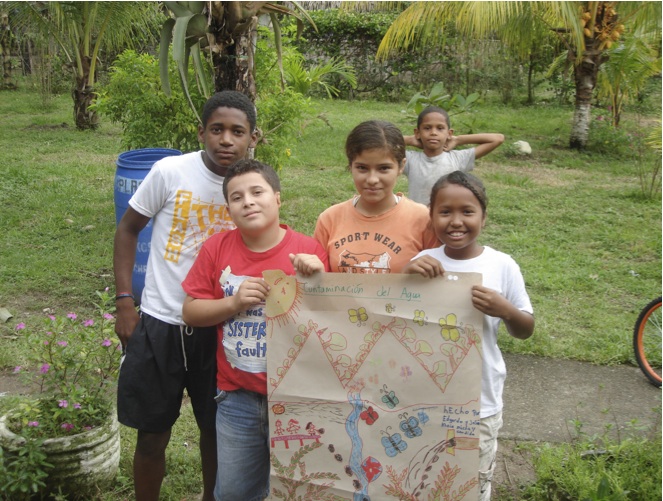
Environmental Education with some of the kids

Beautiful mangroves

Brittany MacGillivray - Community Development Facilitator in Honduras

After a long day of traveling, I arrived late in the day Sunday to San Pedro Sula, Honduras on October 14th. I was promptly greeted by a smiling and helpful compañero, who much like myself was eager to get out of the busy, loud, and smelly city, and head to the coast. Jumping right into things the next morning, most of my first week was spent being oriented to the office and all of the people involved with the project. Much to my devastation however, when you drive into the Barras communities along the beach, you are shown a reality that exist here that is a major problem: the garbage! Due to the ocean currents and the geography of the coast, garbage is constantly being washed up onto the, what would otherwise be beautiful beaches. As is indicated in the picture, one of the many problems that exist with this is the sanitary nature of the things (i.e., the discarded medical jar) that sit on the shores where people are living, where food is caught, and where children are playing. Roger assures me that in January we will attempt to clean some of this garbage up, and hopefully start a trend where beach clean-up becomes a regular occurrence.
Garbage that collects on the beach in the Barras.

Week two and three for me were spent in Copan Ruinas at a Spanish language school, which was a helpful and necessary venture. Following my language training, the first work day back in Cuyamel, another reality sets in: we are faced with a lot of hardships here before the restoration work can even begin. Specifically, due to the rain the night before, the office had been flooded, and soon after discovering this, the electricity went out for the remainder of the day due to a tree falling onto a power line several kilometers up the road. This will continue to be a constant battle for us throughout the next couple of months while rainy season is upon us.

Throughout the weeks to follow, many of the same problems were faced again, with issues regarding electricity, but more so with the rain. The road to the Barras gets washed out, which prevents us from getting into the communities and conducting our restoration work. Finally, toward the end of week five we were able to get into the communities. Thursday and Friday we had visitors from other projects in Honduras with us to help conduct a workshop with some of the women from Barra Motagua, and to begin an initiative regarding the exchanging of knowledge between projects. A local artist showed everyone how to make jewelry and other useful things, such as long-lasting candles and purses out of the garbage that they have on the beach. Teaching these skills to the members of the community is useful because it gives them the opportunity to participate in their own economic venture, making and selling the things that they are able to produce from the trash that cost them nothing to acquire and use.

The following week, I spent a day being introduced to the nursery that is being constructed in Cuyamel. It will be largely beneficial to the project to have the nursery in town, close to the office to help increase the protection and care of the juvenile plants, along with the already established nurseries at the schools in the two communities. The next day was a long day spent making our way into Cuero y Salado on a knowledge-exchange venture with the project in Barra Salado. The sharing of knowledge is a beneficial opportunity for our project, as it is not as well established as the project in Cuero y Salado. Specifically, it will aid us in our initiatives by allowing us to observe the progress and successes made in a similar project. These methods can then be implemented here, allowing us to further help those who live in these vulnerable Barra communities, and to further protect and restore the environment that exists there as well. On our drive back to Cuyamel we also stopped to visit the mangrove restoration project in Cacao, spending some time there being shown some of their ideas and efforts, as well as getting to see their very large, very diverse nursery.

Hopefully over the next couple of weeks the rain will allow us to get back into the communities so we can spend time applying our new knowledge, getting some trees into the ground, and doing some monitoring of the restoration sites.
Por ahora, eso es todo de Cuyamel.
Hasta pronto,
Brittany


The group of participants from the workshop in Barra Motagua.

Roger, Paula, Carlos, and I on our tour through the mangroves in Cacao.